

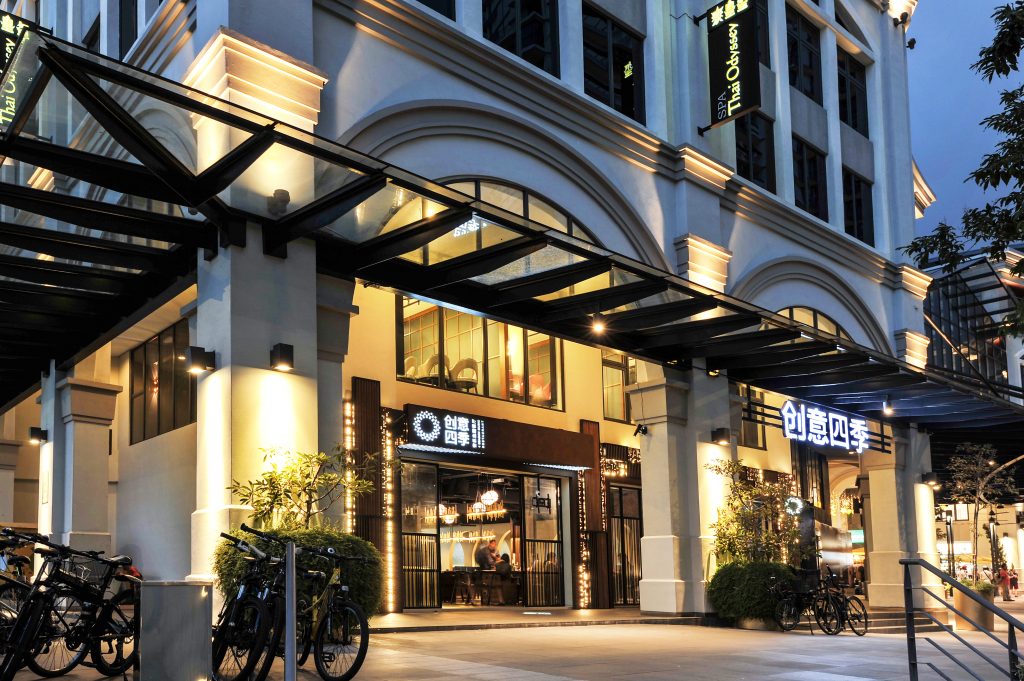
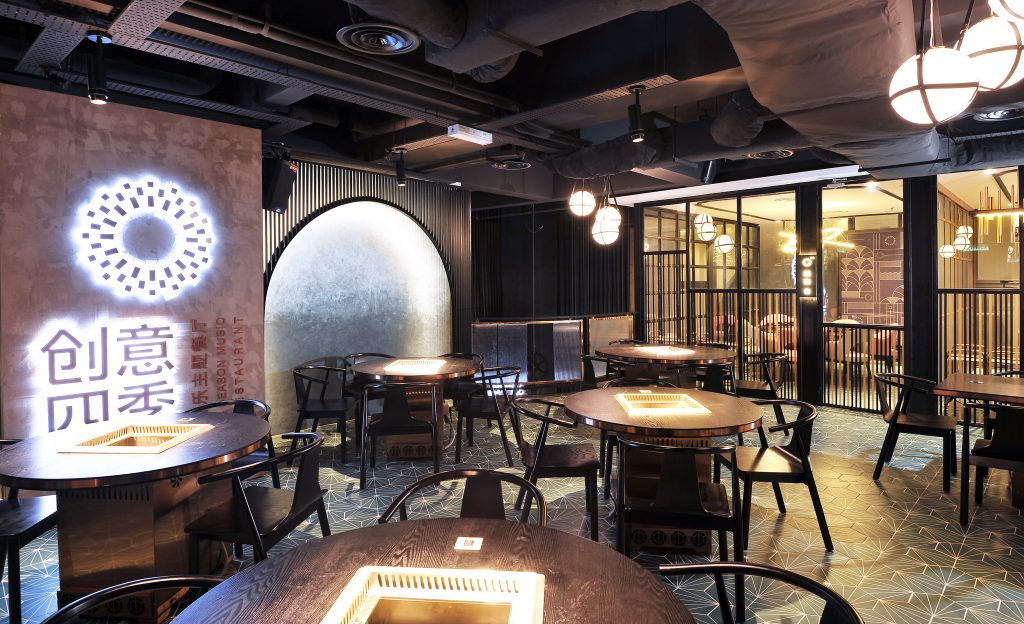
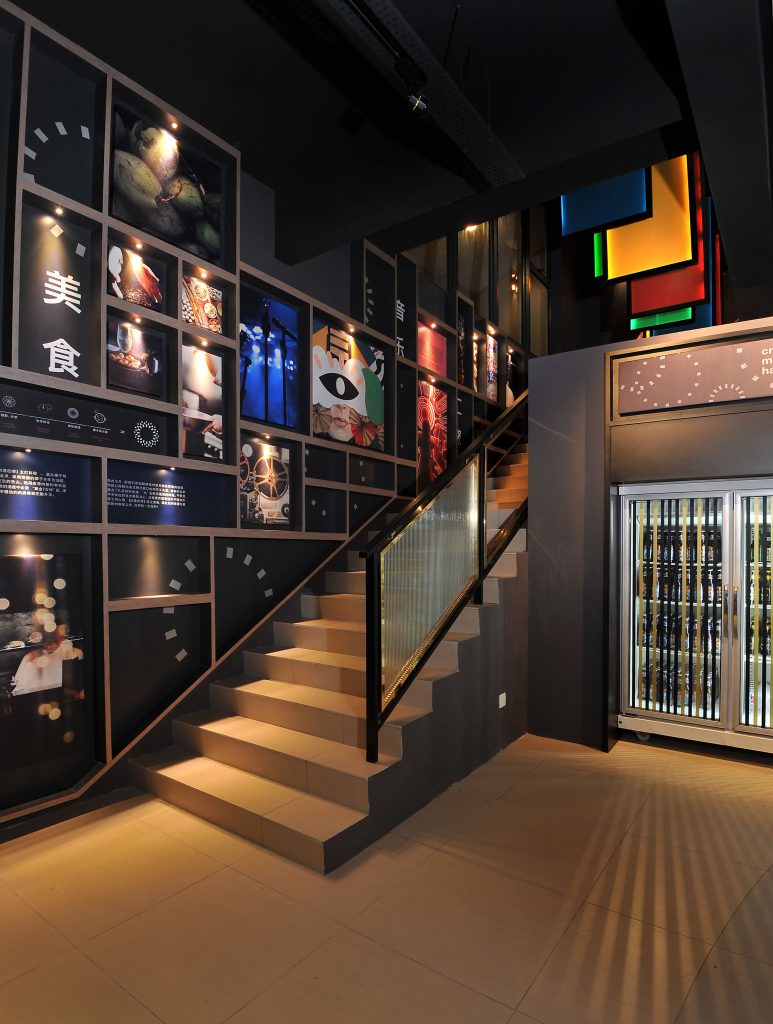
 Four Season Music Restaurant is a contemporary hotpot restaurant that adopts a pioneering and innovative design where Eastern and Western concepts converge in one place. With the owners’ expectations that the restaurant should be entertaining so that families and friends can gather, feast in style, and share happy times together, food and music are at the heart of the design philosophy.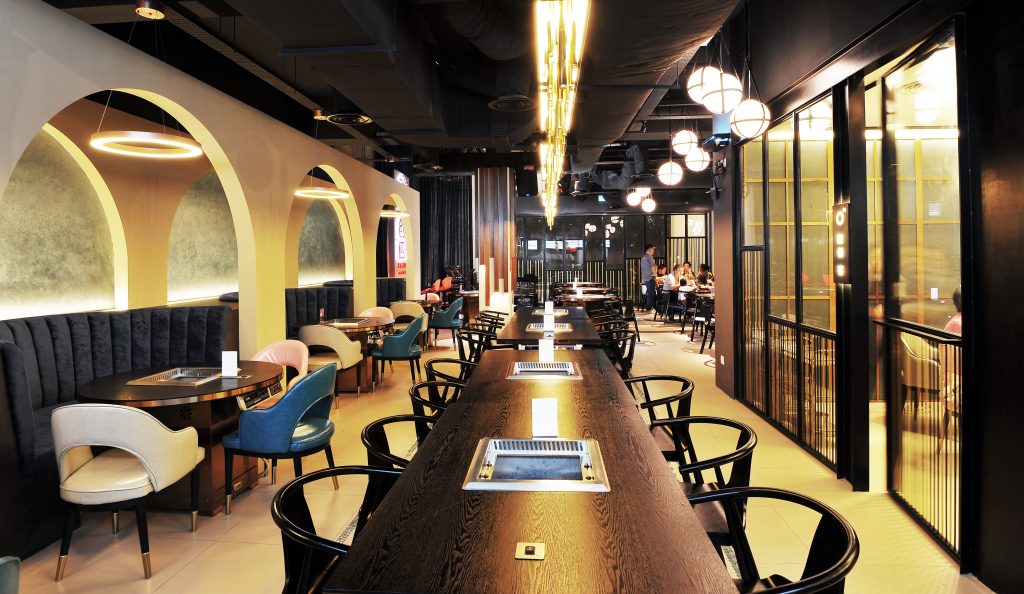
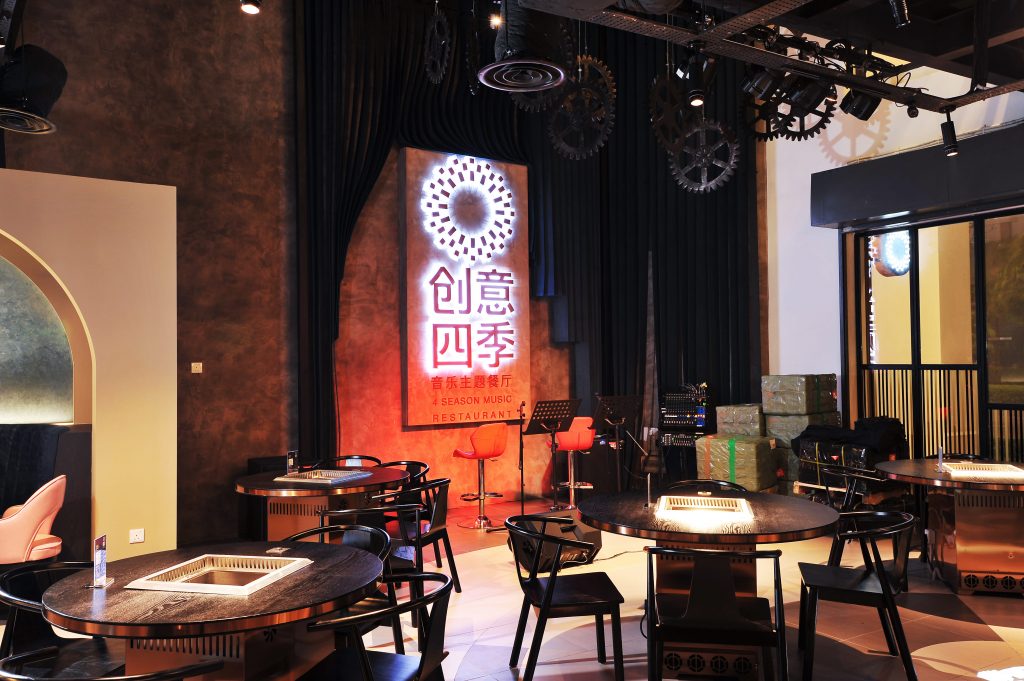 The hotpot restaurant adopts a royal opera house design, where diners may dine at the main dining space and the circle foyer at the second floor while enjoying live jazz music from the entertainment stage. The choice of jazz music, which focuses on improvisation, interaction, and collaboration, is appropriate in this dining setting. Chinese hotpot dining is about cooking improvisation, and promotion of interaction and collaboration among diners; this is made possible through the seating layout that enables groups of four and more persons to dine together. Dim yet warm lighting results in a dining experience that is warm, spontaneous, and comfortable.
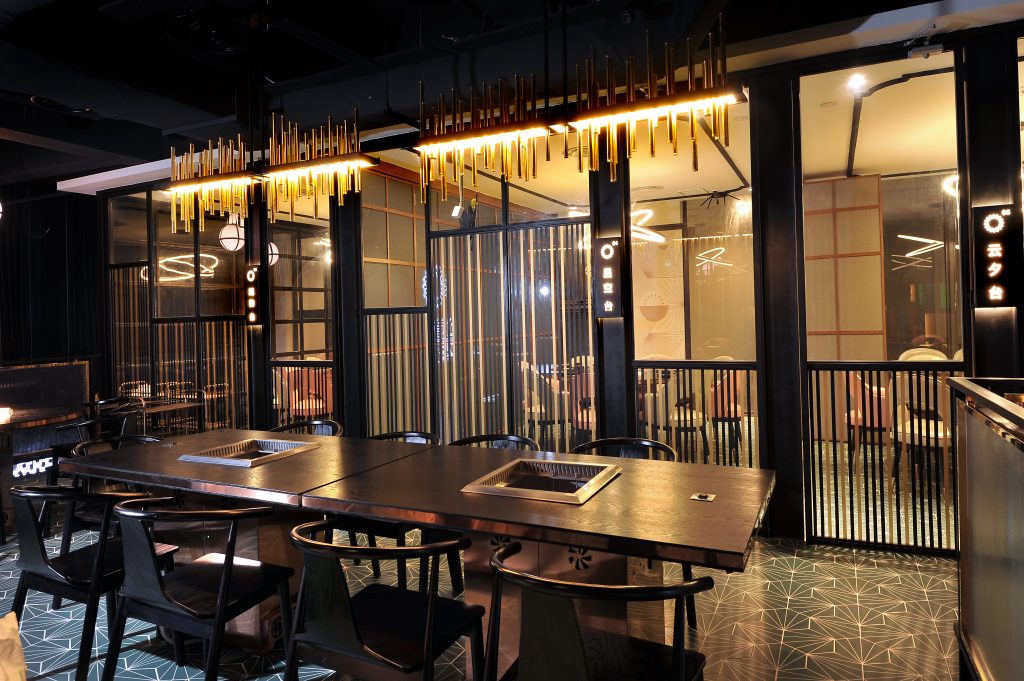 Crossovers between western and eastern design elements are noteworthy. Chinese interior design elements include the absence of sharp corners, curtains, and drapes. The use of red, yellow, green, blue, black, and white gives a strong oriental sense. When these pastel and neutral colours are combined, the result is an interesting mix of strength, energy, harmony, authority, and nobility. The use of natural materials, such as wood and bamboo, for the main interior items, such as tables and chairs, match the philosophy of the Chinese peaceful way of life.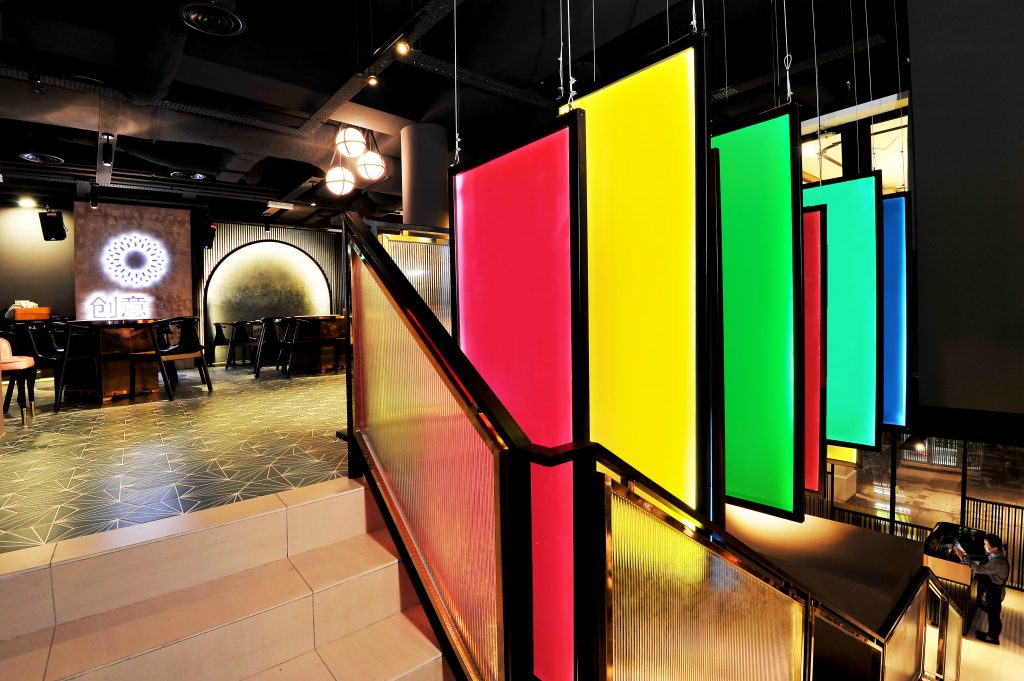



Sponsored Ad



Sponsored Ad
Top Design Stories
- FDSA 2026: Dr. Rena Liu Champions Design Excellence...
 January 20, 2026
 - FDSA 2026: Ar. Dr. Chang Choong Yew from Tunku Abdul...
 January 15, 2026
 - FDSA 2026: Asia Pacific University of Technology & Innovation’s...
 January 14, 2026
 - KL Midtown welcomes its newest icon, Hyatt Regency...
 August 29, 2025
 - FDSA 2026: Muzamil Mutalib avows for his anticipation...
 August 21, 2025
Featured Story
- MACIOPLUS Flagship Store, A Living Art Museum Rooted...
 October 6, 2026
 - H.R. Owen Group Announces Official Appointment to Operate...
 October 6, 2026
 - Beyond the Showroom with Logan Lim, Founder of Forest...
 October 6, 2026
 - Intertextile Shanghai 2026 Highlights the Future of Home...
 September 14, 2026
 - Sloping Green Roofs "Keep the Family Connected" at This...
 September 8, 2026
Spotlight
- SBID International Design Awards 2026: Nu Infinity...
 October 9, 2026
 - 5 Notable Brutalist Buildings in Kuala Lumpur You Need...
 October 8, 2026
 - Steve Leung Design Group Designs Qeelin House as a “Theatre...
 October 7, 2026
 - Thái Công Mansion: The Wes Anderson Façade Meets...
 October 6, 2026
 - Beyond the Showroom with Logan Lim, Founder of Forest...October 6, 2026
- CIFF Guangzhou 2027 Looks Ahead With 30 Years of Furniture...
 October 5, 2026