What Makes a Room Luxurious? A History of Luxury Design
August 21, 2026
From royal workshops to Art Deco Paris, the history of luxury design is a full history of changing ideas, craftsmanship, status and beauty.
A room reads as luxurious when the materials, the craftsmanship and the intention behind it all line up. Marble, brass and velvet are usually the first things people picture, and yes, they can make a space feel expensive. However, that shortlist only explains part of the story, since plenty of rooms use the exact same materials and still read as merely costly rather than genuinely luxurious.
Understanding that gap means looking at where the idea of luxury began in the first place.
From Royal Workshops to Ruhlmann
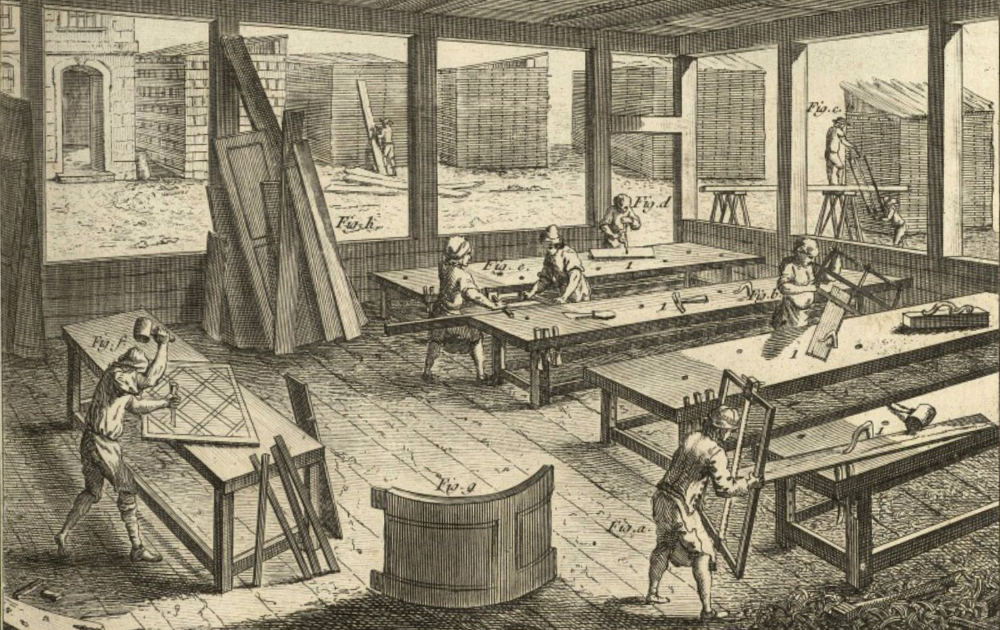
Long before luxury became an interiors category, it was a relationship between wealthy patrons and the craftsmen capable of satisfying them. In 18th century France, cabinetmaking was a serious profession, with its own guilds, hierarchies and standards. Cabinetmakers, upholsterers and gilders worked to exacting requirements, producing objects for a royal court that expected difficulty and skill to show in the finished work.
As a result, the value of an interior came from more than the materials themselves. The labour required to transform those materials into something precise and exceptional was part of the luxury.
Credit: Denis Diderot’s 18th century multi-volume epitome, “Encyclopédie”
By the turn of the 20th century, that French tradition was facing a new challenge. Industrial manufacturing was accelerating, while Germany and Austria were producing design ideas that appeared increasingly forward looking beside the established French tradition.
France responded by asserting its cultural authority through design, and one of the clearest expressions of that effort came through an exhibition.
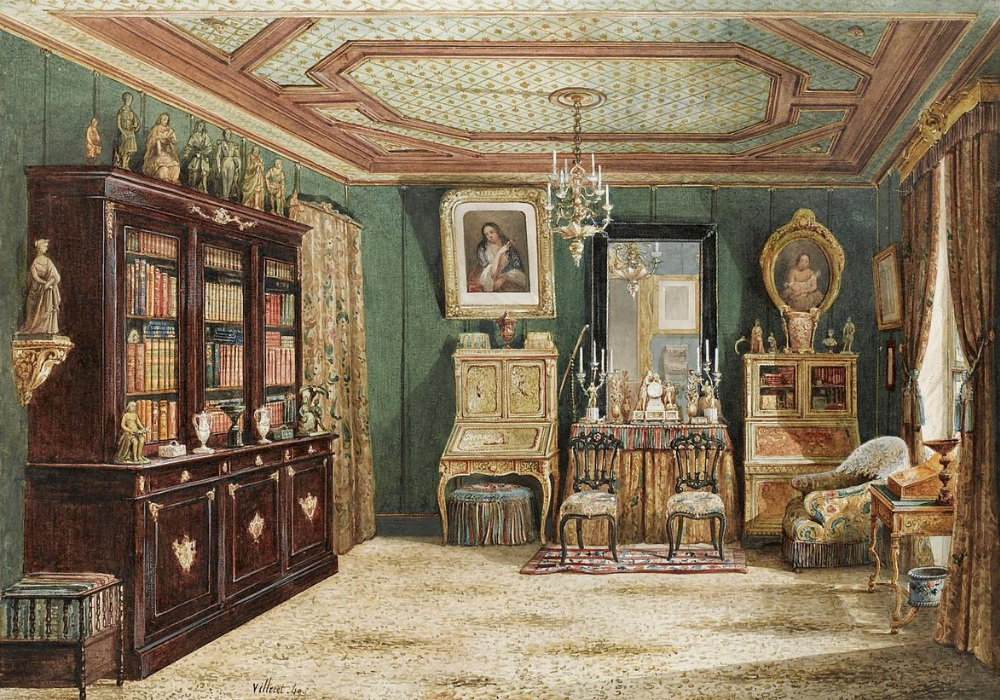
An Ornate French Living Room by François Etienne Villeret 1800-1866, Frankrijk
The Exhibition that Defined Art Deco
The Société des Artistes Décorateurs, founded in 1900, had been pushing for a modernised national design language. By 1912, the French government agreed to sponsor an international showcase of decorative arts, intended to demonstrate France’s continued influence over the field.
War delayed the event until 1925. When the Exposition Internationale des Arts Décoratifs et Industriels Modernes finally opened in Paris, it attracted more than 16 million visitors over seven months.
The exhibition was meant to represent a new era, so reproductions were banned and exhibitors were expected to present original, modern work. Yet some of its most celebrated pieces drew heavily on older traditions of craftsmanship, and that tension became one of the defining characteristics of Art Deco: new forms built through highly traditional skills.
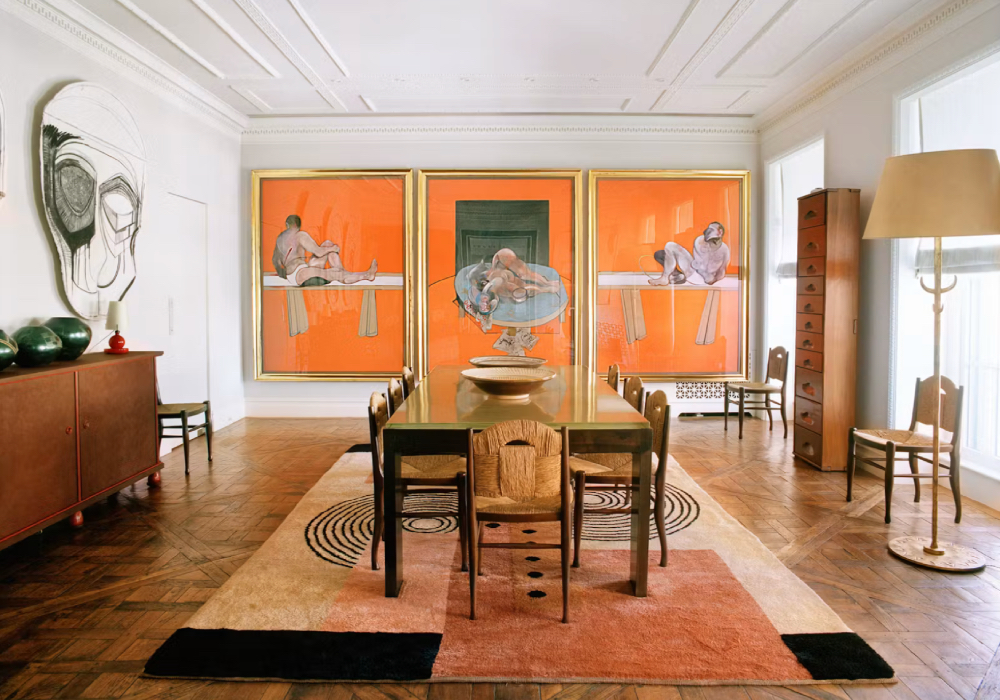
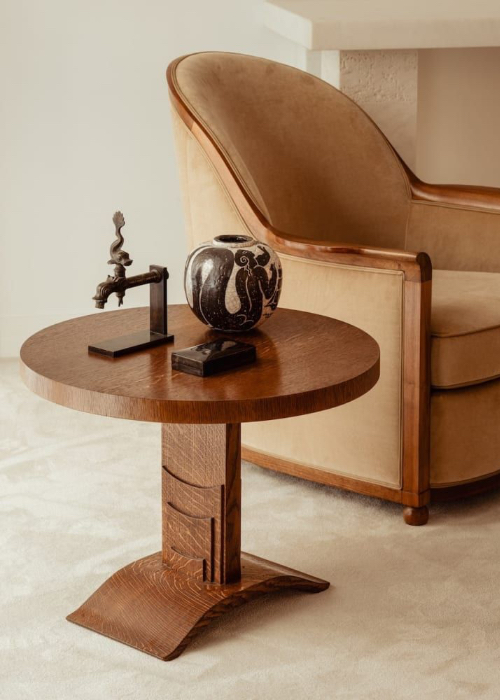
Emile-Jacques Ruhlmann’s 1930s dining chairs; Ivan de Silva Bruhns’s 1930s carpet; Jean Dunand’s 1920s sideboard. (Credit: François Halard)
Rare woods, ivory, shagreen, lacquer and precious metals were shaped using techniques that had existed for generations, then brought together in geometric and controlled forms. Émile Jacques Ruhlmann made this approach particularly clear. A single large piece of his furniture could require around a thousand hours of work and cost roughly as much as a house.
His clientele included industrialists and members of the newly wealthy, for whom the furniture offered more than function or decoration. It represented a level of craftsmanship, exclusivity and cultural status that could be recognised by anyone who understood what had gone into making it.
Around the same period, though, another idea of luxury was beginning to take shape.
Elsewhere in Europe, designers were questioning whether luxury needed to depend on elaborate craftsmanship at all. The Bauhaus, founded in Germany in 1919, treated industrial materials and mass production as design possibilities rather than compromises.
That thinking appeared in Paris through Le Corbusier’s Pavilion de l’Esprit Nouveau, presented at the very same 1925 exhibition. Its approach stood in sharp contrast to the decorative richness associated with designers such as Ruhlmann.
Rather than making craftsmanship visible through ornament and rare materials, it placed greater emphasis on function, proportion, architecture and restraint.
The disagreement mattered because it changed the definition of what made something valuable.
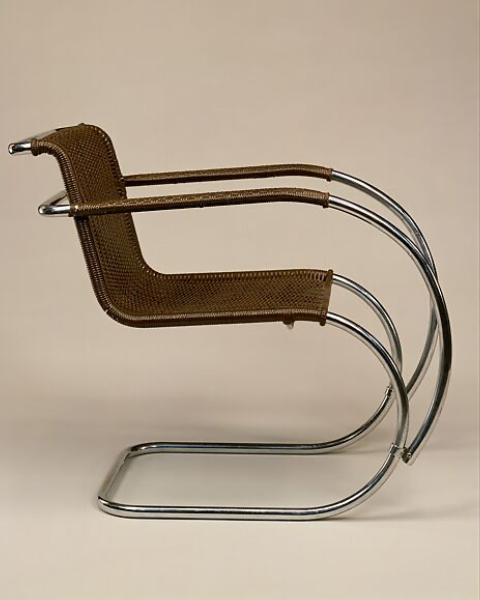
From that point onward, a beautifully made object could demonstrate its worth through the complexity of its construction, or it could achieve the same sense of quality through simplicity and precision, and luxury design would carry more than one visual language from then on.
"MR" Armchair by Ludwig Mies van der Rohe, 1927
What Separates Luxury from Expensive Design
Luxury has never depended on a fixed set of materials or a single aesthetic. Its definition shifts according to what a particular culture, period or group considers difficult, desirable or worth preserving.
Craftsmanship mattered in the workshops of 18th century France. Rarity and technical skill became central to Art Deco. Later, engineering, proportion and industrial production offered another route to distinction, so a chair could command a high price because of the intelligence of its construction, while a room could cost a fortune and still appear almost austere.
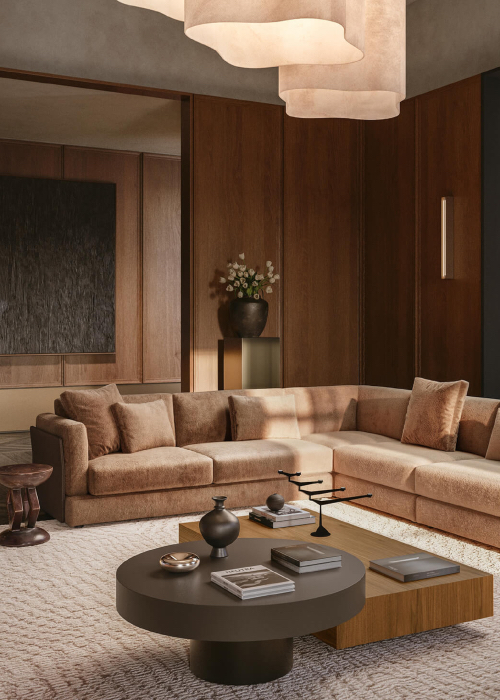
That same distinction remains visible in contemporary interiors. Some rooms continue the older tradition, using rare stone, hand finished timber and furniture made by specialist craftsmen whose names carry considerable weight. Others pursue luxury through architectural restraint, where the value lies in the precision of a junction, the proportion of a room or the resolution of a detail that might barely announce itself.
In both cases, the materials matter, and the thought and intention behind them matter just as much. A piece of furniture can carry the signature of its maker through the way it is constructed, even with little ornament to draw attention to it.
Likewise, an interior can feel exceptionally refined simply because every element has been considered in relation to everything around it.
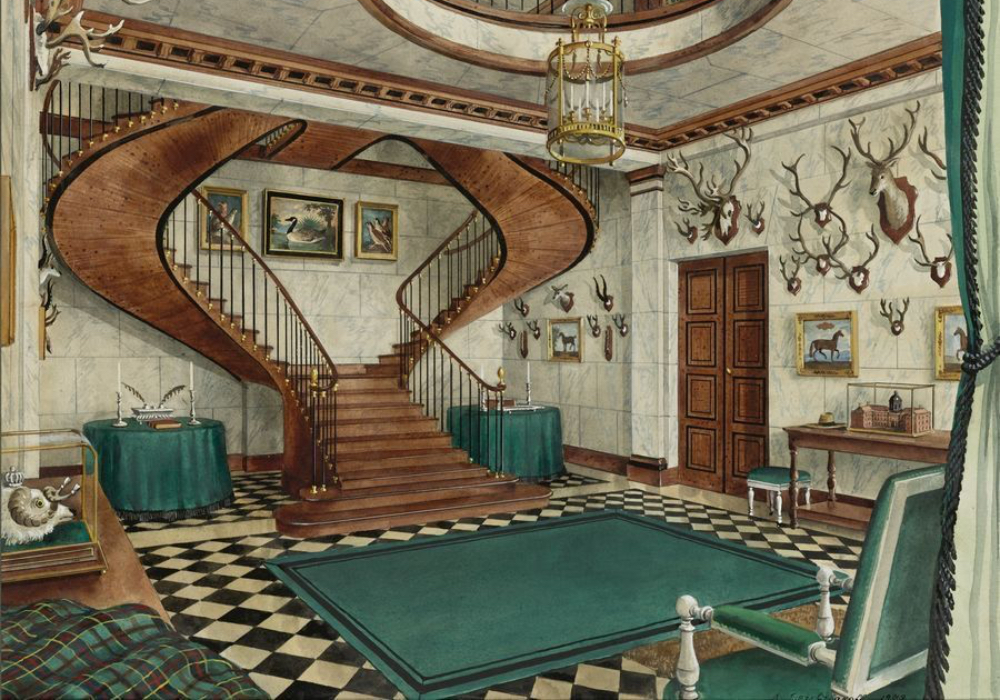
Alexandre Serebriakoff. Chateau de Groussay: Entrance Hall, 1942.
Why Craft is Back
That thinking helps explain the renewed interest in craft, provenance and longevity across contemporary design. Bespoke commissions let designers create pieces around a particular room rather than selecting from a catalogue, while historic techniques are being revived alongside new manufacturing technologies, giving designers more ways to combine tradition with innovation.
There is also a growing appreciation for materials that improve with age. A surface no longer has to make its entire impression on the day it is installed, since timber can develop a deeper character, metal can acquire a patina and stone can become more distinctive through use.
Increasingly, durability and ageing are simply part of the appeal.
LEMA's Groovy Sofa
Ultimately, the history of luxury design is a history of changing values. The debate has moved from ornament to restraint, from handmade production to industrial methods, and from rarity to technical ingenuity, with each period offering its own answer to the same underlying question: what is worth the effort?
That question is still shaping contemporary interiors today. Luxury, in the end, has less to do with how expensive a room looks, and everything to do with how thoughtfully it has been made.